CLEARRULES · OPINION
A useful photo description starts with why the picture is there
Automatic alt text helps when the author has supplied no description. For Instagram and Facebook posts, there is another job: conveying the detail that made you choose this particular picture.
A photograph on Instagram or Facebook also has readers who encounter it through a screen reader. Alternative text gives that software a description of the image. In a January 19, 2021 article, Meta explained how automatic descriptions help when the author has not supplied one. This is not a new November 2026 feature. It is a reason to return to an important publishing decision: what information from the picture needs to reach the reader?[1]
In that article, the company said the screen-reader users it consulted particularly valued accuracy, and explained its qualified wording by the possibility of recognition errors. That approach deserves support. Even a short description can provide information where there would otherwise be silence. Insisting on a perfect author-written description for every photograph, while leaving it undescribed until then, would be an odd way to advance accessibility.[1]
The purpose of the post changes what matters
W3C’s images tutorial recommends choosing a text alternative according to the image’s purpose and context. This is web-accessibility guidance, not a promise about a particular Instagram feature. But the editorial principle also suits social posts: a description should convey the information that made the image worth including. Listing visible objects is sometimes enough. Sometimes that list leaves out the very detail the reader needs.[2]
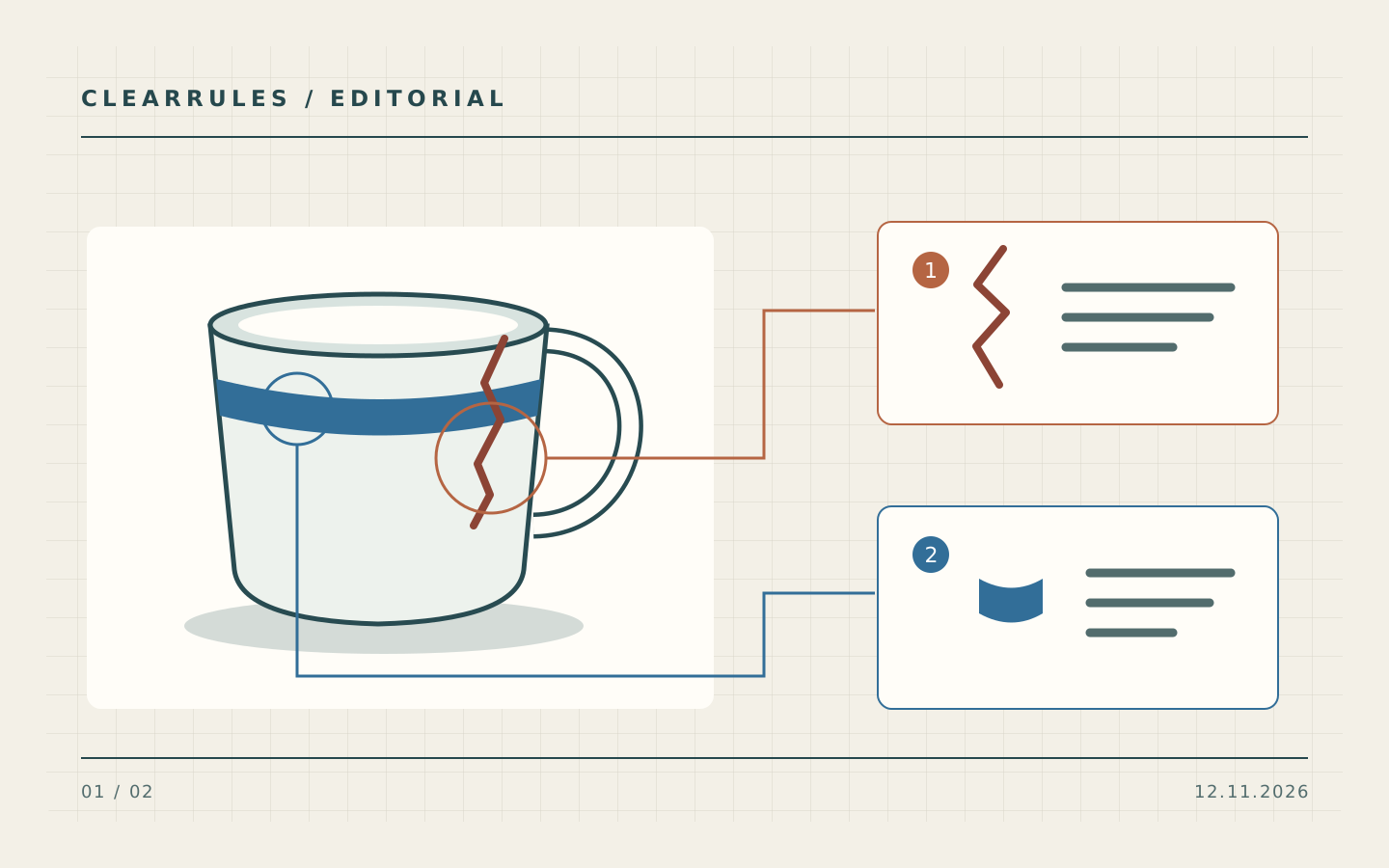
Imagine a photograph of a white cup with a blue band and a crack beside its handle. In a repair story, the important fact might be that the crack runs from the base of the handle to the rim. In a collection of painted designs, the broad blue band below the rim matters more. It is the same hypothetical photograph. Both descriptions can be accurate, but each serves a different post. The author knows why the picture was chosen and can put that knowledge to use.
This is not a contest between a person and an image-recognition system. An automatic description may usefully identify the cup, its colour and the position of objects. Our example does not establish that Meta’s present system would miss the crack: we have not tested it. It establishes a different point: even an accurate inventory of details needs to be related to the subject at hand. If the post explains a repair, the reader needs to understand the damage, rather than merely learn that the picture contains tableware.
Supply meaning without inventing a story
Knowing the purpose does not license invention. A description of the crack should not turn into a confident account of someone dropping the cup when that is unknown. Likewise, a facial expression alone does not entitle the author to state another person’s mood as fact. A useful description lets the reader work from the image. An invented cause or emotion quietly replaces it with the writer’s interpretation.
Nor should every piece of text inside an image become a visual-recognition exercise. If you publish a workshop poster, it makes sense to put the date, venue and participation conditions in the ordinary post text. Decorative lettering can remain part of the design, but readers should not have to decipher it to learn where and when to turn up. That is an editorial choice that helps communicate the message regardless of how well a particular tool describes the image.
For ClearRules, a useful habit before publishing is simple: read the text without the picture and ask what essential meaning has disappeared. Restore that information in the description or the main text. It might be the position of a crack, the exact words of an announcement, or the composition that makes a joke work. Automatic descriptions deserve continued development and support. The author still has a worthwhile job alongside them: you chose the picture for a reason, and you can tell the reader what matters in it.