CLEARRULES · OPINION
What Facebook checks before it gives a profile a badge
The free Facebook Verified badge helps identify who is behind a profile. On Marketplace, buyers need to understand how far that check goes.
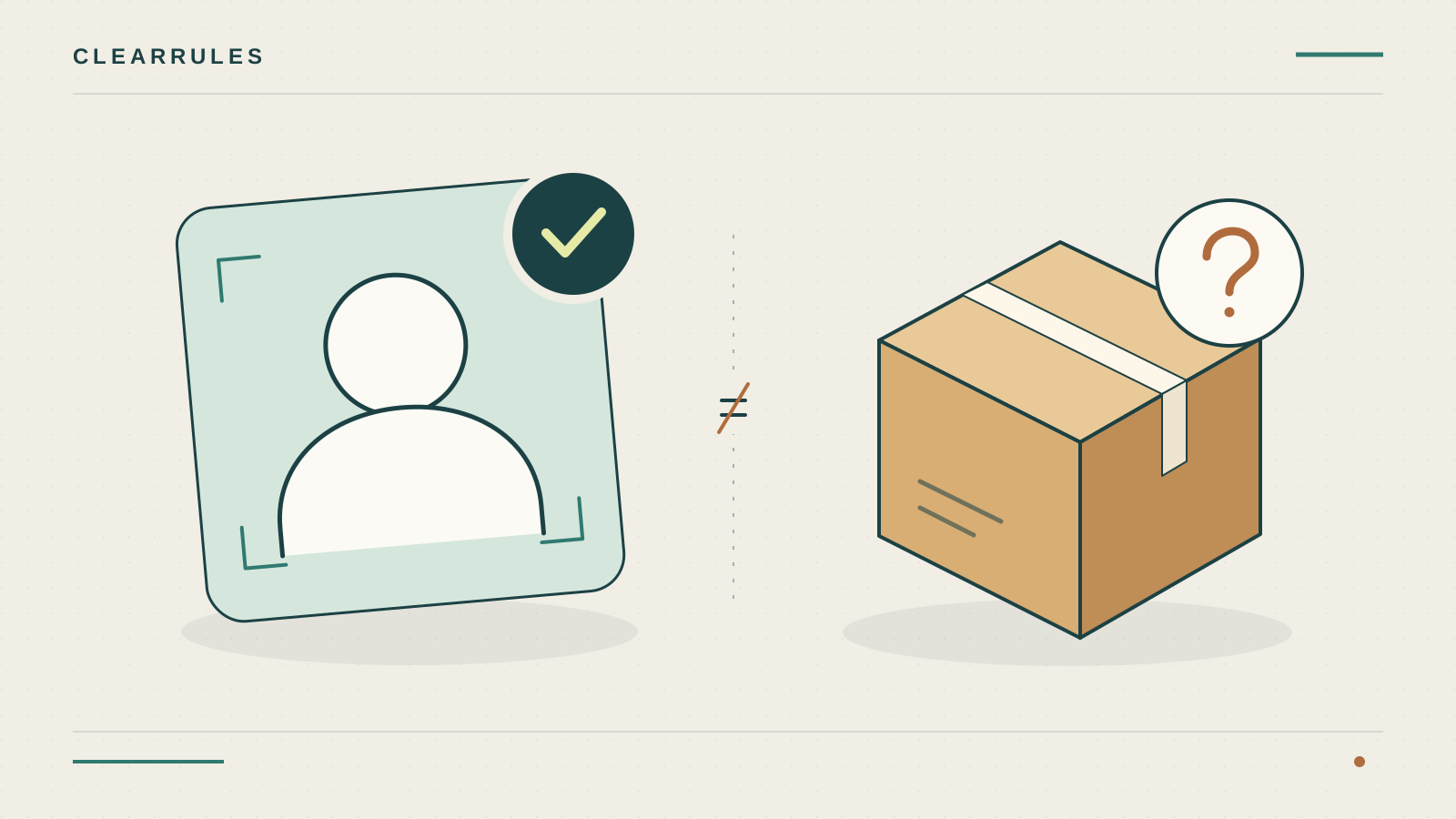
A Marketplace seller may have a tidy photograph, a persuasive item description and a badge beside their name. The third is easy to read as Facebook’s verdict on everything else. Yet the free Facebook Verified badge, announced by Meta on July 24, 2026, has a narrower purpose: to indicate that a real person is behind the profile. This is distinct from Meta Verified, the paid subscription introduced in February 2023.[1][3]
That purpose deserves to be taken seriously. In his July overview, Facebook head Tom Alison presents verification as reassurance before approaching someone unfamiliar. Knowing who you are starting a conversation with is useful. ClearRules’ view is straightforward: the badge becomes more valuable when its meaning is clear, rather than when buyers have to guess what the platform has approved.[2]
The person is checked. The item needs its own evidence
Meta describes comparing a short video selfie with existing profile photographs. It also requires the account to meet company standards, including those against fraud and deception. Meta itself explicitly says the badge is neither an endorsement of the user nor a guarantee of their trustworthiness.[1]
Imagine buying a used camera. Even if there is no doubt about the seller’s identity, other questions remain: does the shutter work, is the lens scratched, what comes in the box? A face check does not inspect a camera. Those answers need to come from the description, photographs and the seller’s replies, or from inspecting the item when that is possible.
Keeping these questions separate gives the badge a useful job. You can have a better idea of whom you are speaking to and still need evidence for what they promise. Buyers are entitled to ask further questions. An honest seller is better served by answering them than by asking a symbol to do all the persuading.
An unbadged profile may never have been checked
The reverse mistake matters too. The July announcement limits Facebook Verified to eligible users aged 18 or over and excludes Pages and accounts in professional mode. Meta describes a phased launch in selected markets without naming them. That announcement cannot establish a reliable country-by-country availability list for November.[1]
A missing badge therefore cannot be read as a failed check. Someone may not have taken part, may not qualify or may not have access. Turning an optional check into an unwritten requirement for everyone would make limited availability look like a judgment on people who were never assessed. This is our reasoning about how to interpret the badge, not a finding about buyers’ behavior.
A useful badge needs a precise meaning
For ClearRules, the main question about the explanation of Facebook Verified is whether a buyer who reads it understands what was checked. Can they separate a profile check from an item’s condition and the promise to deliver it? That is more useful than trying to fit a seller’s entire reputation into one tick. It is a criterion for a clear explanation, not the result of a test we have conducted.
Free verification can make a first conversation less uncertain. That is a worthwhile benefit without turning it into a purchase guarantee. Knowing there is a real person behind the profile is a useful first step. Deciding on a particular transaction still requires evidence about that transaction.