CLEARRULES · OPINION
Instagram estimates your age. How can we tell whether protection reaches the teenagers who need it?
Meta is expanding its search for teenagers who entered an adult date of birth. The number of accounts that keep their protective settings cannot, on its own, tell us how well that search works.
On November 9, 2026, Meta announced that it is expanding the use of AI worldwide to find Instagram teenagers who entered an adult date of birth. The company moves these accounts into Teen Accounts, a mode that limits contact, content and time spent on the app. The idea makes sense. Protection that can be bypassed with the wrong date on a form leaves too much up to the person it is meant to protect.[1]
This extends an existing technology rather than launching it for the first time. The Facebook rollout is continuing, while a worldwide rollout of similar technology for Threads is promised later in 2026. November's notifications to parents concern the United States, and the use of age ranges supplied by Apple concerns Australia. The word ‘global’ in a headline does not make every part of an announcement worldwide.[1]
What an encouraging number tells us
A Meta article linked to the announcement contains an encouraging result. In an update dated September 21, 2025, the company reported that more than nine in ten active Instagram teen accounts remain in the protective settings designed to reduce unwanted content. This is a historical company claim, not a new measurement from November 2026.[2]
That result has value in its own right. Settings are little help if they are switched off as soon as they are enabled. Keeping protection in place shows that it remains part of everyday use. Dismissing the figure as entirely useless would therefore be unfair.
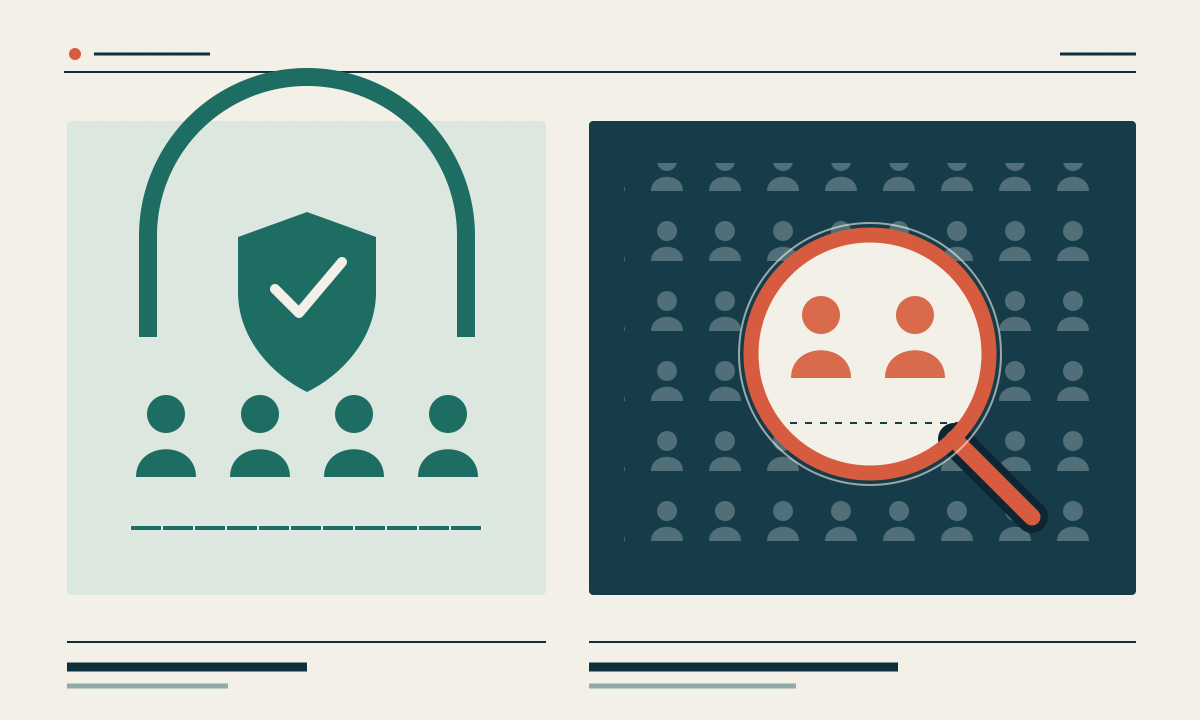
But it answers a question about accounts already known to belong to teenagers. The new announcement concerns a different group: those Instagram still considers adults. A teenager the system has not identified may never enter the calculation of how many accounts retain their settings. A high percentage within the first group tells us nothing about the size of the second.
Check who the system missed
For ClearRules, the central question is what share of actual users aged 13–17 the system still leaves outside teen mode. Answering it requires checking a sample of users whose ages have been independently confirmed, including those the AI classified as adults. Studying only accounts that were moved into teen mode is not enough: the missed teenagers would once again disappear from the assessment. This is our proposed test, not a result Meta has reported.
Errors in the other direction have consequences too. An adult mistaken for a teenager needs a clear way to correct the decision. In its 2025 article, Meta acknowledged that mistakes were possible and promised that settings could be changed. That does not establish today's appeals process in every country. Nor should moving accounts into teen mode be confused with removing accounts belonging to children under 13: the November announcement describes these as separate tasks.[1][2]
Count those still without protection
There is a sound reason for the expansion: it aims to bring existing protections to people who might otherwise miss out. The promise of reaching millions more teenagers remains Meta's forecast, however; the announcement does not include results from a completed worldwide rollout. We can support the direction of the work today without treating its accuracy as already proved.[1]
Success will mean fewer teenagers left with adult settings, not merely a larger group with an impressive percentage inside it. Keeping protections in place for the users already found matters. The next meaningful answer needs to concern those who have yet to be found.