CLEARRULES · OPINION
A human reviewer needs a rule they can actually apply
Instagram removed a woman’s account of medication during childbirth after several human reviews. The instructions those reviewers followed deserve as much scrutiny as their decisions.
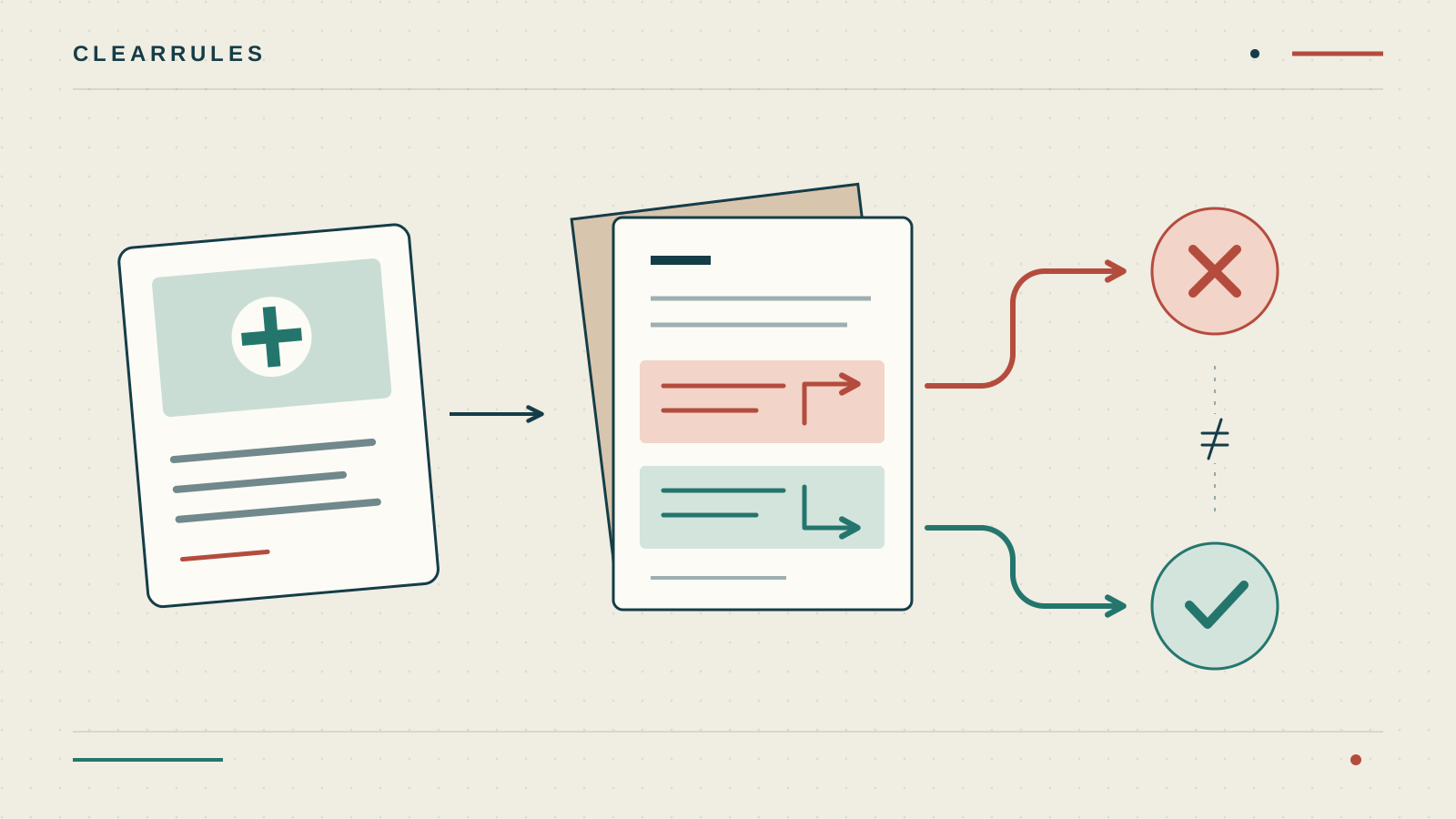
On 29 October 2026, the Oversight Board overturned Meta’s removal of an Instagram video from the United States. A woman had described prescribed medication during pregnancy and childbirth, including clinically administered fentanyl. Meta had already restored the post and reversed the strike after the Board took up the case, but kept it adult-only and excluded from recommendations. The Board rejected those remaining restrictions too.[1]
Several human reviews had preceded the correction. That detail changes the familiar demand to let a person look at a decision. People had looked. For ClearRules, the harder question is whether their instructions allowed them to reach the right answer.[1]
The exception lost inside the instructions
The full decision identifies conflicting guidance: some instructions allowed reviewers to consider medical context; others gave the high-risk drug classification priority even when that context was clear. Meta acknowledged that ordinary reviewers following its guidance might reach a different conclusion from its specialists.[2]
A public rule can make a sensible distinction and still fail in practice. If the working instructions tell a reviewer to treat one word as decisive, asking for more care does little to resolve the conflict. Repeating the review with the same instructions may simply repeat the error.
This also changes where responsibility belongs. It is too easy to blame the last person who clicked a button when the company’s instructions can lead them away from the company’s own interpretation. A workable exception must be available during routine review, without requiring an exceptional intervention.
Medical context still has to mean something
The strongest objection is serious: a medical exception must not become cover for promoting illicit drug use. The Board itself contrasted this case with an earlier paid ketamine promotion that lacked sufficient evidence of medical supervision. Here it described unpaid personal experience with clear clinical context. Those differences matter.[2]
Taking context seriously does not mean accepting a reassuring label without looking further. A reviewer needs to examine what the post describes and what it asks its audience to do. A personal account of treatment and an offer to supply drugs pose different questions, even when they name the same substance. Protecting the first need not weaken scrutiny of the second.
Test the instructions, not just the promise
The Board recommended aligning internal guidance with the public rule. Its decision also describes a concrete consequence of the delay: the woman’s temporary feature restriction had run its full course before the correction. Reversing the strike was useful; it could not give that time back.[2]
The useful test is therefore practical. Can a reviewer using the normal instructions recognize a clearly documented medical case and explain why the exception applies? That is ClearRules’ proposed way to assess the instructions, not a claim that Meta has performed such a test.
Human review deserves support when people have the authority and guidance to use judgment. Adding another person to a contradictory process leaves the contradiction intact. The repair begins with making the rule usable where the decision is actually made.